‘Good Christian country’: Inside Paul O’Sullivan’s letter ‘pleading’ to move to SA during apartheid
· Citizen
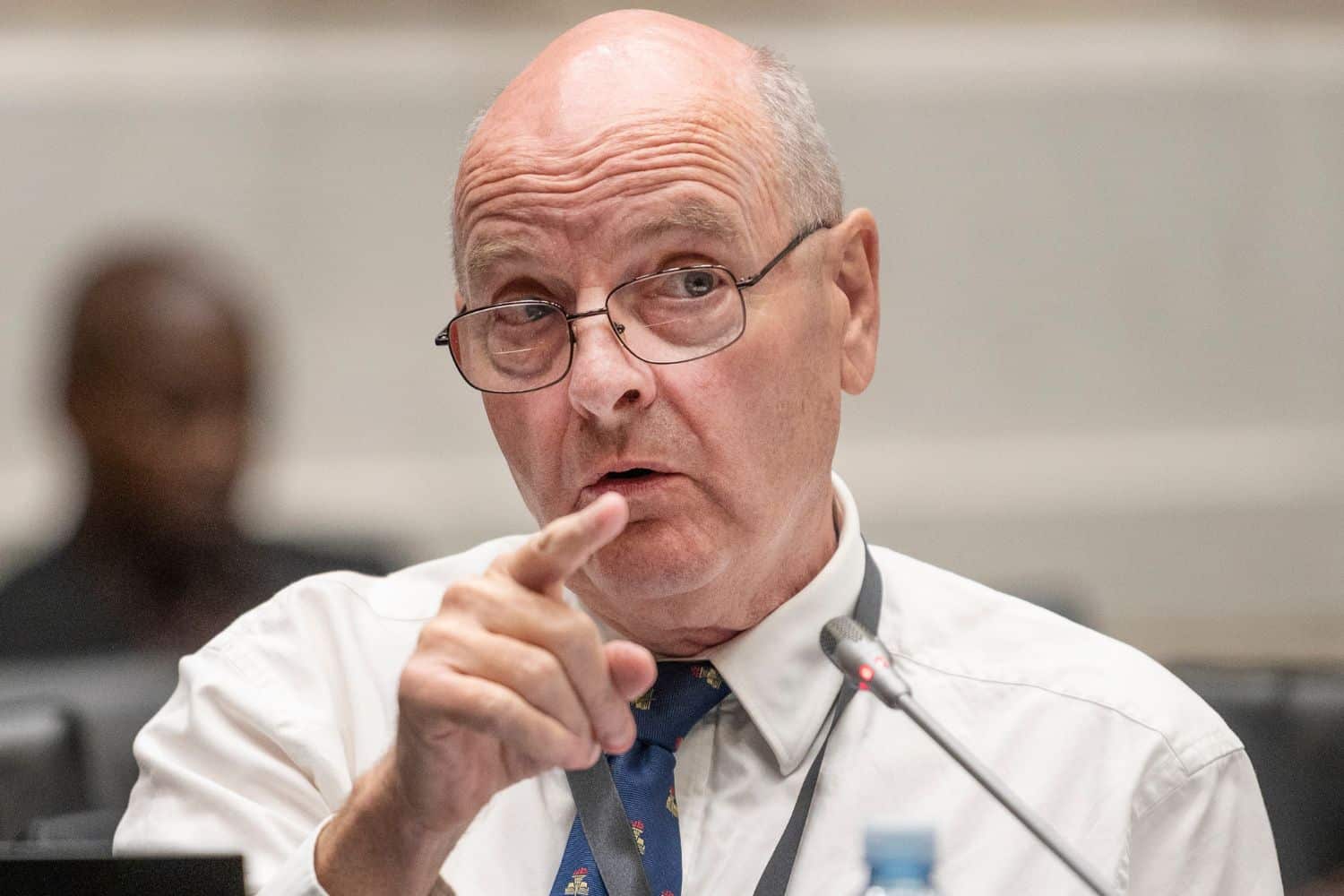
Fraud examiner Paul O’Sullivan came under scrutiny on Tuesday as members of Parliament’s ad hoc committee questioned his intentions for wanting to move to South Africa during the 1980s, when the country was under apartheid rule.
Visit milkshakeslot.com for more information.
O’Sullivan testified before the committee at the Good Hope Chamber in Cape Town as part of an inquiry probing alleged corruption, criminal infiltration and political interference within South Africa’s justice system.
Paul O’Sullivan in the spotlight
Following the lunch break, evidence leader Norman Arendse questioned O’Sullivan about a letter dated 23 November 1982.
The letter was addressed to SS Van Der Merwe, then director-general of the department of internal affairs under the apartheid government.
It was written by a “Watterson”, believed to be Derrick Wilfried Watterson, who was a Member of Parliament (MP) for the New Republic Party in the 1980s.
Arendse indicated that the letter referred to O’Sullivan’s desire to settle in South Africa.
ALSO READ: ‘My loyalty is to South Africa’: Paul O’Sullivan denies being foreign agent
O’Sullivan earlier told the committee that he holds Irish-British citizenship and moved to South Africa in 1989 after obtaining permanent residency.
He applied for South African citizenship in 1994 and received it the following year.
He explained he had first visited the country as a “tourist” in the 1970s, returning once or twice a year for holidays.
He later invested in property and eventually moved permanently, citing his love for the country, the weather, and the people he met.
‘Suitable settler’
Arendse highlighted that the 1982 letter described O’Sullivan as a “suitable settler” with a “very conservative political attitude” who would be a “useful addition to the white community”, recommending that he be granted a work permit.
The letter further stated that O’Sullivan could participate in military service in South Africa due to his background in the British army and his experience in military intelligence.
Watterson also wrote that he had met O’Sullivan in the United Kingdom (UK) with the fraud examiner’s friend, Frank Martin.
The evidence leader revealed the existence of a handwritten letter dated 20 November 1982, in which O’Sullivan described himself as being in a predicament after applying for a work permit during a visit to South Africa two years earlier.
READ MORE: Ramaphosa was ‘a very good student’, Paul O’Sullivan tells ad hoc committee
In the letter, O’Sullivan explained that he had sold his house in the UK with the intention of settling in South Africa.
At the time, his fiancée was expecting a child, but his work permit was refused, preventing him from starting work or settling permanently.
The letter also stated that O’Sullivan liked South Africa because it was one of the few countries without communist-inspired unions and that it was a “good Christian country”.
He added that he would learn Afrikaans to integrate and asked Watterson for assistance.
‘It was 42 years ago’
Reacting to the handwritten letter, which he confirmed was in his handwriting when shown to him by Arendse during the lunch break, O’Sullivan said he had first seen it only last week on social media, although it appeared authentic.
He told the committee he knew Martin from a service members’ club in the UK and that Martin wanted him to move to South Africa.
“It was 42 years ago, I was in my 20s,” O’Sullivan said.
He told the committee that Martin, who had been a prisoner of war alongside O’Sullivan’s late father, had encouraged him to apply for an engineering job and instructed him on what to write.
“I wrote what Frank told me to write.”
He said he could not recall what happened afterward, but continued visiting South Africa regularly and spent his honeymoon in the country after getting married in 1984.
Watch the ad hoc committee below:
O’Sullivan accused of lying
O’Sullivan added that he did not send the letter himself, instead giving it to Martin, who “handled it”.
“I don’t recall having met this fellow, Watterson.”
Arendse argued that the letter amounted to an appeal to a politician to assist O’Sullivan in obtaining a work permit, noting that it mentioned an offer of employment by Jim Powell.
However, O’Sullivan said Watterson’s letter to Van Der Merwe was written after he had already left South Africa and that he only heard three months later from Martin that the engineering position had been filled.
Arendse accused O’Sullivan of writing an “untruth” to influence a government official.
O’Sullivan denied this, saying the contents of the letter were “exaggerated”.
“It would have been a predicament if I was given the job,” O’Sullivan replied.
Arendse said he had obtained the letter “on good authority” and not from social media, adding that it was not a “casual” document.
‘I’m firmly anti-racist’
O’Sullivan insisted that he only moved to South Africa in 1989, receiving residency as “a person of independent means”.
When asked whether Martin was a Bureau of State Security operative, O’Sullivan denied this, saying Martin was an MEC in Natal.
O’Sullivan rejected the suggestion that he would have portrayed himself as a contributor to the white community.
“I wouldn’t have said that and the reason I would have said that is that I’m firmly anti-racist,” he said.
READ MORE: ‘Summons is a last resort’: Didiza denies protecting Brown Mogotsi, Paul O’Sullivan
Arendse countered that O’Sullivan – who denied that he was a former spy – had expressed a desire to integrate into the South African way of life.
“What was the South African way of life in 1982?” Arendse asked.
He accused O’Sullivan of wanting to integrate into a white-dominated racist society while portraying his move as opportunity-driven.
O’Sullivan responded that the South African way of life he referred to involved the nice climate and outdoor activities.
“I was not interested in contributing to apartheid or anything of that nature.”
‘People were being killed’
Arendse said O’Sullivan’s explanation contradicted his letter, but O’Sullivan replied that, in his 20s, he did not fully understand the political reality at the time.
He contended that he was unaware of legislation such as the Group Areas Act.
“I had some knowledge, but did not have full knowledge of all the things that was happening,” O’Sullivan said, adding that he was “probably naïve”.
Arendse suggested that O’Sullivan may have been recruited by South Africa’s security apparatus due to his military background.
He also reminded O’Sullivan that he joined the South African police as a reservist in 1990 after being recruited by Major Edwards, the husband of his secretary.
O’Sullivan said he accepted the role after the democratisation process had begun, Nelson Mandela had been released, and the ANC had been unbanned.
“I felt that I didn’t want to live in a country where apartheid existed,” he said.
“I thought that would be a good opportunity to make a democratic country and I did my part.”
EFF leader Julius Malema and Paul O’Sullivan at the Good Hope Chamber in Cape Town on 10 February 2026. Picture: Gallo Images / Brenton GeachEFF leader Julius Malema later criticised O’Sullivan’s testimony, questioning his claim of ignorance about apartheid-era violence.
“The only thing you tell us is weather. People were being killed and you wanted to come and join that kind of lifestyle of killing people,” Malema said.
O’Sullivan maintained that he was unaware of the full extent of what was happening in the country at the time.
NOW READ: Paul O’Sullivan hits Mkhwanazi with defamation lawsuit