Ontario fast-tracks Great Bear gold mine project
· Toronto Sun
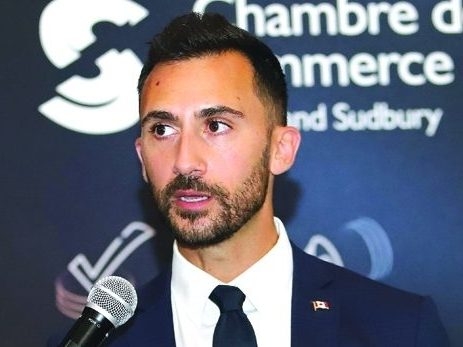
At a news conference in Mississauga on Tuesday, Energy and Mines Minister Stephen Lecce announced the province is fast-tracking Kinross Gold Corporation’s massive Great Bear Project in northwestern Ontario under the government’s new “One Project, One Process” (1P1P) framework.
It’s the first gold mine, and just the third project overall, to be accepted since the new system launched in October.
Visit albergomalica.it for more information.
Curious about the price tag? More than $5 billion. The province’s promise? More than 1,000 good-paying jobs. And the message Ontario wants to send out? It’s open for business.
“What we are doing again this year is standing up for our country,” Lecce said. “We’re sending a message that we can be bold, we can be ambitious, we can move with speed, we can do it in the national interest at a time when our country is under attack.”
Lecce didn’t hold back
In a world he described as uncertain and unstable, Lecce said Ontario is positioning itself as the opposite.
“In the sea of uncertainty, we are emerging as an island of stability. That reliable, democratic partner you can count on,” he said.
The Great Bear Project, located about 24 kilometres southeast of Red Lake — a town with a long mining history — is shaping up to be one of Canada’s premier gold operations. The high-grade mine will include both open-pit and underground operations, with an initial mine life of 12 years.
Production and construction
At peak production, the mine is expected to churn out more than 500,000 ounces of gold per year, with an estimated 5.3 million ounces in initial production. There’s also room to grow, thanks to ongoing regional exploration.
Major construction is expected to start in 2027, with production targeted for 2029. During operations, about 900 jobs will be created, with peak employment reaching 1,100 workers. Thousands more construction and indirect jobs are expected during the build-out phase.
Ontario: top mineral producer
For a province where mining already supports 28,000 direct jobs and 46,000 indirect jobs — and generates $13 billion in mineral production annually — this is no small addition. Ontario is already Canada’s top mineral producer, with 37 active mines, including 19 gold operations. Gold accounts for a significant portion of that value.
Lecce said the old system was holding the province back. “It took too long to build a mine, too challenged to do big things. We were often held back by our own bureaucracy and red tape.”
Under the previous permitting system, it could take up to 15 years to open a mine. The government says, not anymore.
“One Project, One Process was our Premier’s vision — a plan to cut permit timelines by 50%. And we’ve now made that the law of the land,” Lecce said.
The goal of 1P1P
Under 1P1P, the Ministry of Energy and Mines acts as a single point of contact, coordinating all provincial approvals and Indigenous consultations to streamline the process and cut review times in half. The goal is certainty, predictability, and speed.
“If they’re going to deliver and invest $5 billion in our economy, as Kinross is announcing today, then we are going to move mountains,” Lecce said. “Capital will flow to a jurisdiction that is reliable, ethical, a clean grid, a strong workforce — but more than anything has a regulatory system that moves.”
Kinross CEO welcomes green light
“The One Project, One Process designation marks an important milestone for the Great Bear Project and reflects Ontario’s leadership in creating the right conditions for responsible, long-term mining investment,” Kinross CEO J. Paul Rollinson said.
“For Kinross, this designation facilitates a more integrated and streamlined path forward as we advance the permitting of this world-class mine towards commercial production in consultation with Indigenous communities.”
Rollinson called Great Bear a “generational asset” that is “positioned to becomes one of Canada’s largest and most profitable gold mines once operational”.
Power line to support mines and communities
The company says it’s already begun early site work and infrastructure planning, including tying into nearby power lines and a natural gas pipeline. The project is also linked to broader regional development, including consultations on the proposed Red Lake Transmission Line — a power line that would run from Dryden to Red Lake to support new mines and growing communities.
The province insists its duty to consult Indigenous communities remains fully intact under the new framework. In fact, it says 1P1P offers a more coordinated and transparent approach. Ontario is backing that up with a $70 million Indigenous Participation Fund and $3.1 billion in loan guarantees through the Indigenous Opportunities Financing Program to support equity participation and partnerships.
Lecce frames project as bigger than gold
“Every worker, every resource, every phone and EV battery, everything we touch and do in this technologically connected world — all paths and roads lead back to the north.”
And as global economic uncertainty looms, he doubled down on the theme of self-reliance.
“At a time of global economic uncertainty, Ontario is choosing to build — to build faster, to build more at home, and to build Canada’s self-reliance,” he said. “By fast-tracking Kinross Gold’s Great Bear Project, we’re getting shovels in the ground, proving that world-class projects can be built with speed and in partnership.”