Barbecue rebel Adam Skelly’s legal fate in hands of judge
· Toronto Sun
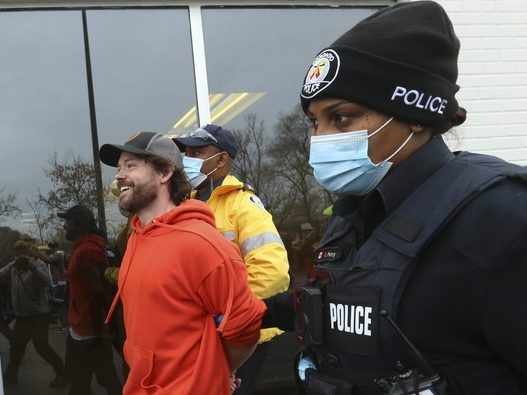
The legal saga of restaurateur Adam Skelly isn’t out of the slow cooker just yet.
Visit asg-reflektory.pl for more information.
After closing arguments wrapped Friday afternoon, Judge Janet Leiper told a downtown courtroom she’ll need time to weigh the very “technical” legal matters in the case of Skelly, who more than five years ago led and encouraged a protest against COVID-related restrictions at his Etobicoke eatery.
“I have a task ahead of me to look at this. I can appreciate the public’s interest,” she said.
At issue was Skelly’s protest – the so-called Barbecue Rebellion of November 2020 – and City Hall’s reaction to it.
Skelly’s lawyer Ian Perry alleges a list of infringements against his client’s freedoms under the Charter of Rights.
After Skelly served meals at his restaurant, Adamson Barbecue, in defiance of a lockdown, a brigade of police was brought in and the city changed the locks. When Skelly broke into his own property, he was arrested and detained “for over 30 hours,” Perry said – just one of the charter breaches alleged.
The city is seeking $187,000 in “ policing costs ” from Skelly. That potentially hinges on this case, as do criminal matters against Skelly, the court heard.
‘Not a single case’
Critical to Skelly’s charter challenge is what’s called Section 1 of the document, which lays out “reasonable limits” on an individual’s rights – effectively a government override of one’s freedoms. Perry told Leiper the Crown hadn’t established that the limits the municipal and provincial governments put on Skelly’s rights were reasonable.
“The Crown doesn’t want you to go to Section 1, because they know the Section 1 analysis, they fail,” he said.
Perry also argued they had not proven Skelly’s restaurant posed enough of a danger to make their actions proportionate.
He said the province’s own expert provided figures that showed the industry sector that covers bars, restaurants and nightclubs was only tied to “.05% of cases” in the first year or so of the pandemic.
“Not a single case” was connected to Adamson Barbecue, he said.
Further, he questioned the province’s strategy of putting places like Toronto and Peel Region in lockdown while allowing restaurants elsewhere in Ontario to operate.
“Your charter rights don’t depend on your postal code,” Perry said.
While Perry complained about government overreach, the Crown argued he couldn’t suggest a better method to deal with COVID. The court heard it would be unfair to have limited the rights of just health-care workers, for example, rather than the entire population of Ontario, an idea that was mentioned during a pretrial examination of the province’s expert, Dr. Matthew Hodge.
Perry rejected the idea that he should be stress testing the governments’ own actions.
“Frankly, I don’t think that’s the applicant’s obligation. It’s the Crown’s,” he said.
Perry also called it “absurd” that one would argue, as the Crown did, that Skelly’s restaurant reopening wasn’t truly a protest.
“Compliance does not denote an expression, but peaceful defiance certainly does,” Perry told the court. “The disagreement was palpable at the time.”
City can’t ‘demolish the building’
Friday morning opened with the City of Toronto’s lawyer Penelope Ma picking up from Thursday’s proceedings, during which the city laid out the danger posed by the virus. Ma then moved to the justifications for assuming control of Skelly’s restaurant – and Leiper didn’t always seem to be on board with her arguments.
The judge asked if the city could’ve taken “any less restrictive” measures than locking Skelly out of his own barbecue joint. Ma said no, as while Skelly was allowed to pivot to selling takeout and delivery meals, he instead chose to “flaunt.”
“You can have the authority,” Leiper said, “… but does that mean you can demolish the building? … There must be limits.”
Ma conceded that the city’s use of trespass law against Skelly was unprecedented, but said, “respectfully, a lot of things were unprecedented at that time … and unprecedented doesn’t mean unlawful.”
Much of Friday’s proceedings dealt with esoteric matters such as precedents in charter law, the legal definition of seizure and from what Toronto’s medical officer of health Eileen De Villa drew her authority to restrict Skelly’s business.
Neither De Villa nor Skelly attended in person.
Lawyers on both sides made reference to the recent case of Kimberley Taylor , who sought entry to Newfoundland for a funeral in May 2020. (The Supreme Court found in mid-February that the province could refuse entry to non-residents due to the pandemic.)
The staid courtroom discussions about the 2020 protest stood in stark contrast to the carnival atmosphere seen at Skelly’s restaurant on the dates in question. One common thread, however, was the turnout of supporters, as lawyers’ chairs were at one point offered to those standing in the little University Ave. courtroom’s packed gallery.
Leiper did not announce a timeline for her decision.
WHAT IS ‘TAYLOR’?
Lawyers on both sides of Adam Skelly’s charter challenge on Friday made frequent reference to a case called “Taylor,” which is both important and brand new.
The case, officially “Taylor vs. Newfoundland and Labrador,” was only ruled upon by the Supreme Court of Canada on Feb. 13. It concerns a woman named Kimberley Taylor, who was born in Newfoundland but lived in Nova Scotia during COVID.
In May 2020, she wanted to return to Newfoundland for her mother’s funeral. She was initially denied entry to the province, which then restricted entry by non-residents.
In an unusual twist, Taylor was ultimately allowed to attend the funeral after asking authorities to reconsider, then, with the Canadian Civil Liberties Association on her side, sought to have the initial refusal deemed an infringement of her mobility rights under the Charter of Rights and Freedoms.
As with Skelly, Taylor’s case took years to wind through the legal system.
The Supreme Court did indeed find that Taylor’s rights were infringed, but ruled that violation was reasonable under Section 1 of the charter, which limits those rights.