How Much Pain Is Trump Really Willing to Endure?
· The Atlantic
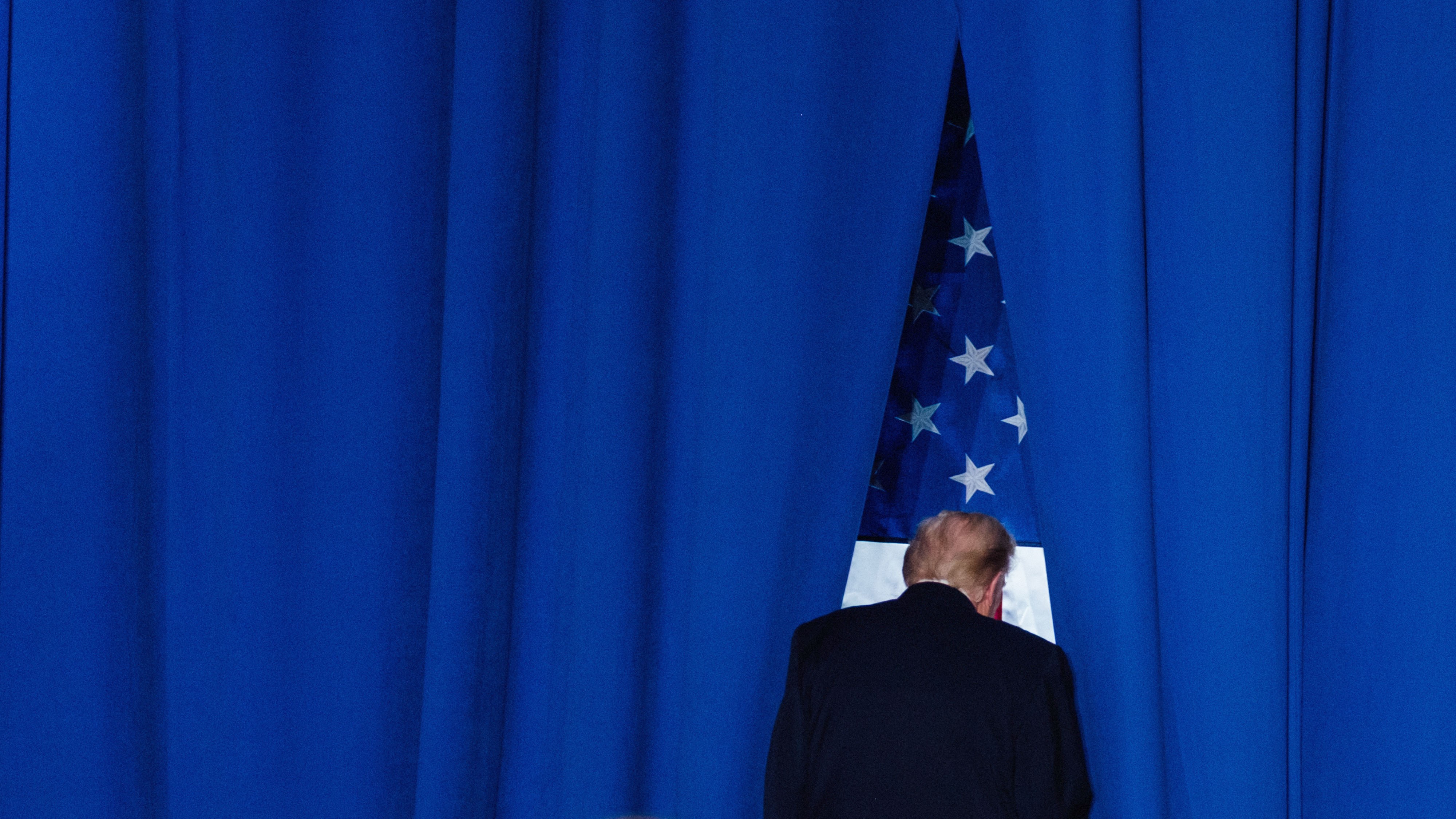
It was supposed to be easy. In the weeks after President Trump authorized the military raid to snatch Nicolás Maduro from Venezuela, he would tell pretty much any audience about how flawlessly the operation had gone. During a late-January phone call with Minnesota Governor Tim Walz, who was seething after federal immigration agents killed two of his residents, the president dominated the conversation by going into great detail about the Caracas incursion. Trump told Walz what he was telling scores of friends and advisers: The U.S. military could do anything, and he had future operations in mind.
Visit aportal.club for more information.
The Iran war has not quite gone to plan. The U.S. military, working alongside the Israeli armed forces, pummeled its targets in the first fortnight of war and significantly damaged the Iranian military’s capabilities, while also carrying out what is believed to be the deadliest accidental American attack on civilians in decades. Iran’s supreme leader was killed, but the nation’s hard-line regime has not crumpled. Instead, it has expanded and intensified the conflict, raining rockets and drones on its Gulf neighbors. Weakened but resilient, the regime has effectively closed a vital waterway through which 20 percent of the world’s oil supply travels, increasing U.S. gas prices and shocking the global economy.
Trump now faces a daunting decision: Does he escalate the conflict to try to achieve his ambitious goals, no matter how unpopular with the American people? Or does he declare some sort of victory and execute a quick withdrawal, minimizing the economic damage but leaving behind an embittered, violent regime with the materials to someday build a nuclear weapon? The eventual outcome may come down to just how much risk Trump is willing to accept—and how much pain he is willing to take.
The U.S. has lost 13 service members since the war in Iran began, the same number killed outside Abbey Gate in August 2021 when a suicide bomber detonated at the Kabul airport as the U.S. withdrew its forces from Afghanistan. Trump blamed that loss of life on President Biden, whose presidency never quite recovered, and Republicans denounced the military-evacuation plan as rushed and chaotic. Trump’s own Pentagon now faces similar questions as the president considers the drastic step of deploying ground forces into Iran. The isolationist president, who in 2016 denounced the “forever wars” of Iraq and Afghanistan and vowed to avoid new conflicts, is long gone. Instead, Trump has suggested that military interventions in Venezuela, Iran, and Cuba will be a key part of his legacy.
After weeks of missile and air strikes, the U.S. military is edging closer to dominating Iranian airspace, making it more difficult for Tehran to defend itself. But the strategy has limits, and air power alone, no matter how overwhelming, has not been enough, especially as Iran chokes off transit through the Strait of Hormuz. Even if the U.S. military opts to take the risky step of escorting ships, it is still weeks away from having the forces in place to pull it off. The disruption in the strait pushed Brent crude oil to nearly $120 a barrel at one point—up from about $73 before the war—raising fears of a global recession. Recognizing the economic (and political) danger, Trump repeatedly urged several nations to send ships to help reopen the strait, writing on Truth Social this weekend that “This should have always been a team effort, and now it will be.”
So far, the president has found no takers. China expressed hesitancy. Europe also balked. Trump has spent his second term antagonizing the United States’ NATO allies by launching trade wars and threatening to take Greenland; little wonder, then, why some of them seem reluctant to help, especially when they were not consulted before the war. Furious, Trump returned to Truth Social this morning for an about-face, declaring “we no longer ‘need’ or desire, the NATO Countries’ assistance—WE NEVER DID!”
[Read: Trump is learning that his bullying has consequences]
Even if major naval powers agreed to escort tankers, shipping companies may not want to risk their vessels—and naval convoys cannot replicate the pace of commercial traffic that moved through the strait before the February 28 strikes. The historical average is about 138 vessels a day, according to the Joint Maritime Information Center. Now there are hardly any. Over 24 hours from Sunday to Monday, only one ship transited the strait, a Pakistan-bound oil tanker, suggesting that Iran is allowing some shipments through, particularly cargoes destined for its allies. Any U.S. effort to reopen the strait carries real danger. Though the Iranian navy has been crushed, it could still fill the strait’s waters with mines. It would take only a single drone—or a speedboat packed with explosives, or a rocket launched from ship or shore—to damage an oil tanker or U.S. warship. If U.S. special forces were deployed on the ground to try to secure the strait, casualties would surely follow. Defense Secretary Pete Hegseth has yet to explain how the U.S. military could better protect the Strait of Hormuz: “Don’t need to worry about it,” he told reporters last Friday.
Military officials privately acknowledge that the more pressure Washington faces from the economic shock of a closed strait, the higher the chance that Trump will hasten an exit from the war, which would leave the Pentagon less time to dismantle Iran’s ballistic-missile, drone, and naval capabilities. Even if Trump were to end the conflict, though, Iran would still have an interest in keeping the strait closed. Iran’s new leadership appears largely intact, despite daily bombardment, and many day-to-day functions of the state continue to operate.
Admiral Brad Cooper, the commander of U.S. Central Command, said in a video posted on X yesterday that American forces are targeting drone factories, missile depots, and the Iranian navy “to eliminate Iran’s ability to project power against Americans and against its neighbors,” and to protect the Strait of Hormuz. But he did not address questions about how hitting military targets helps the U.S. achieve its broader war aims. The administration has listed several reasons for launching strikes now, including pressure from Israel and Iran’s threat to the broader Middle East. Cooper did not mention Iran’s nuclear facilities in his four-minute video, even though Trump has cited Tehran’s nuclear ambitions as a central justification for the strikes.
The military strategy appears aimed at weakening Iran’s defenses enough to pressure the regime without unleashing the kind of collapse that could trigger broader instability across the region. Trump said he spared Iran’s oil infrastructure during Friday’s strikes on Kharg Island—the cornerstone of the country’s economy—“for reasons of decency.” Hitting those facilities would have jolted global markets and crippled Iran’s economy for years.
Trump has typically balked at the idea of deploying significant numbers of ground forces in combat, but any sort of mission to secure or destroy Iran’s uranium stockpile, much of it buried underground and heavily fortified, would require American troops. In addition to the 13 U.S. service members killed so far, more than 200 others have been injured, defense officials told us. When asked in the conflict’s first week about the increased risk of a terror attack as retribution for the war in Iran, Trump acknowledged the possibility by saying, “I guess.” He followed up: “Like I said, some people will die. When you go to war, some people will die.”
Trump has pointedly not ruled out a deployment. Last week, the Pentagon ordered members of the 31st Marine Expeditionary Unit, who usually operate in the Asia Pacific, to move toward the Middle East. The unit, which has a few thousand Marines and sailors on three amphibious ships, is designed to be a quick-response force that can transition from ship to shore. The U.S. military has not said why they are bound for the Persian Gulf. The troops will arrive within the next two weeks and join roughly 50,000 others already in the region.
The deployment could “introduce a whole new level of risk for American troops,” Senator Adam Schiff of California, a Democrat, told us. “It also raises the possibility that U.S. forces could be taken hostage by Iran, and what a mess that would be.”
Republicans didn’t sign up for this. The 2024 elections that put Trump back into the White House and the GOP in control of Congress were fought mostly on pocketbook issues such as inflation. But Trump’s record on driving down costs is decidedly mixed, and waves of worrisome polls have left Republicans even more worried about their chances in November’s midterms. Now they have to defend an unpopular war, one with an estimated cost of more than $11 billion in its first six days alone. The conflict is driving up the cost of gas and could soon trigger price hikes for things such as airfare, shipping, and groceries. For the past year, Trump and Republicans have blamed Biden for any economic woes. But now, given the link between Trump’s war and rising prices, avoiding responsibility will be much harder.
[Read: Trump isn’t even trying to sell this war]
The House, Republicans privately admit, seems lost, and the Senate could follow. But it’s unclear how much Trump cares. He has made remarkably little effort to sell the war, or explain why it had to happen now. Trump had voiced support for the uprisings in Tehran late last year and earlier this year, but those protests were crushed by the ruling regime. Administration officials told us that Trump wanted to attack then but couldn’t because it took weeks for the needed military assets to reach the region. Other experts say this strike was rushed; a former official who is still working with the administration told us that some early preparations were aimed at a May launch.
Victory in Iran will not resemble anything like what happened in the Venezuela raid that so delighted Trump. There is no Delcy Rodríguez in Tehran, a successor-in-waiting who seems willing to be a compliant partner with Washington. Yet Trump has largely continued to bluster and insist that the war is all but won. By design, few on Trump’s national-security team this term will tell him no—which is why the resignation of Joe Kent, the president’s choice to lead the National Counterterrorism Center, reverberated across Washington this morning. Kent posted to social media that he could not “in good conscience support the ongoing war,” and said that “Iran posed no imminent threat to our nation.” While Kent is considered by many an extremist and has embraced conspiracy theories, his act of public dissent was a first from the upper levels of the administration.
A White House spokesperson pointed us to White House Press Secretary Karoline Leavitt’s social-media post about Kent’s resignation letter, in which she deemed his assertion a “false claim,” adding that “as President Trump has clearly and explicitly stated, he had strong and compelling evidence that Iran was going to attack the United States first.”
It’s unclear how much criticism of the war is reaching the Oval Office. Trump operates in a bubble where he encounters little bad news. Though Republicans have publicly explained their concerns about the political impact, the president has not sought an off-ramp. Instead, FCC Commissioner Brendan Carr has threatened to take away the broadcast licenses of networks that don’t provide sufficiently positive coverage of the war, and Trump has suggested that reporters be tried for treason.
Then there’s the tone set by the Pentagon. During Trump’s first term, then–Secretary of Defense James Mattis was a clear-eyed realist when it came to combat; he was fond of quoting the military maxim that “The enemy gets a vote,” emphasizing the need to prepare for the worst. This time around, Hegseth has held news conferences during which he has taken questions from friendly, hand-picked journalists; touted military victories; and bashed the press. His vote? That the nation’s cable news stations use more pro-Trump headlines.